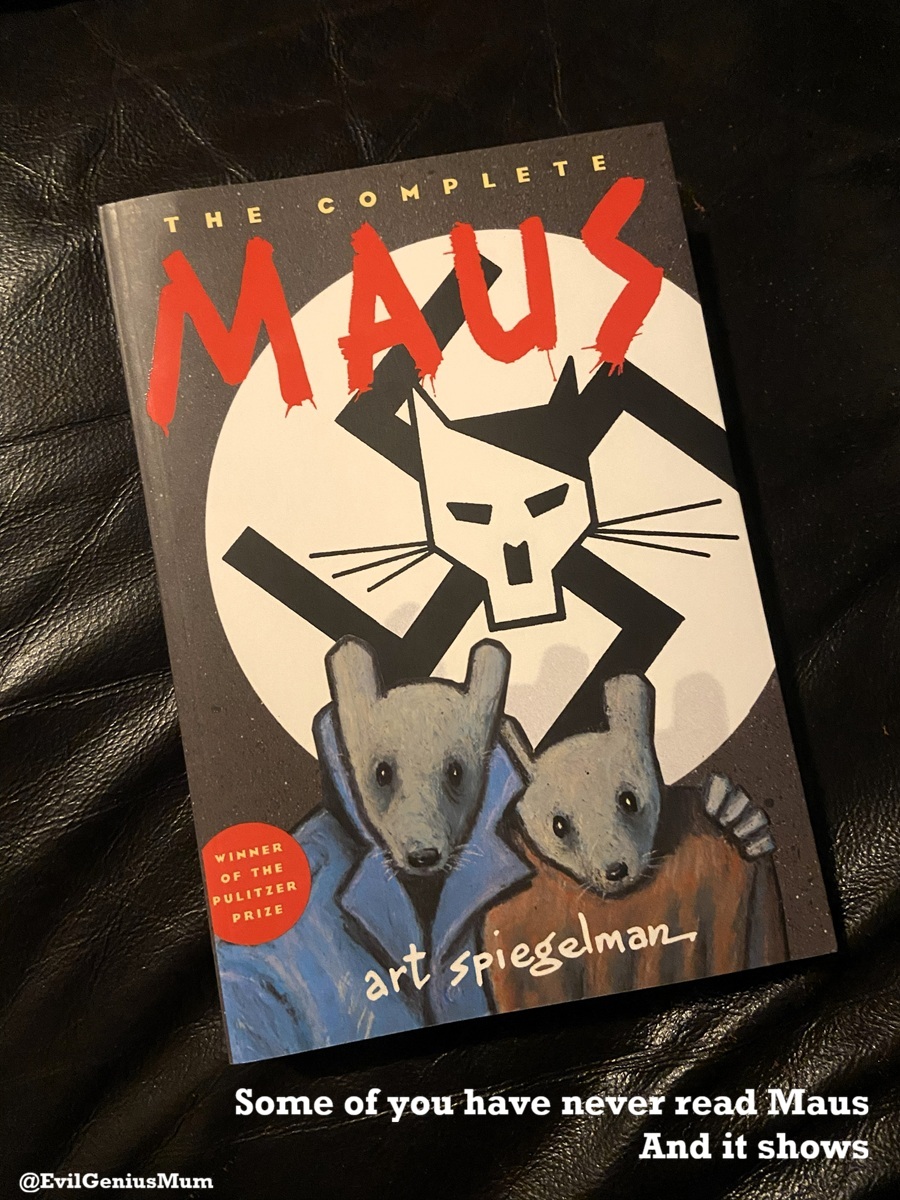
Some of you haven’t read The Complete Maus by Art Spiegelman. And it shows.
Prelude
I have been sitting on this article for a few months, re-reading Maus by Art Spiegelman and waiting for the right time to publish on my site. This is a task in itself because Maus is not an easy book to read, nor re-read. But I cannot deny the gravitas that lies within these pages. The rise in racial hatred, neo-Nazi movements, and the outright fascist behaviour from some world leaders–all of this has made me question how quickly we seem to forget the lead-up to one of the world’s most horrific events in modern history: the Jewish Holocaust of World War II. It feels like such an oxymoron to say “Now more than ever we need to read Maus”, but then another month passes and here we are again. I really need to hit Publish and watch where it lands.
The last month, especially, has been rough. The tragic shooting at Bondi Beach, in Sydney (Australia), on 14 December 2025, expedited the emotional unrest in our community. Everything indicates it was a targeted attack, aimed at the Jewish community who were simply celebrating the first day of Hanukkah at the beach. Suddenly, a review of Maus feels both equally inappropriate and absolutely necessary. Some in the Jewish community have voiced concerns about a rise in anti-Semitism in Australia and around the world. Others have noted the growing hatred and violence across multiple demographics: violence against women; anti-Islamic; anti-First Nations; sexual violence against children. Violence and killing innocent people for practising their faith without harm to anyone else–that’s not just illegal and horrific, it’s actually insensical. For what it’s worth, I am entirely in support of people of the Jewish faith–of any faith–having the freedom to practice their religion without fear of terrorism, violence, or interference from others. As another faith puts it: Harm it none, so mote it be.
However, within days of the Bondi Beach Tragedy, extreme conversations have begun to dominate the mainstream media, with little regard for the damage they leave. Zionists have once again claimed that a threat to Judaism is a threat to Israel, making it political and territorial. To be clear, most people can separate the two: you can support someone’s religious expression and not support their political representatives. For example, I support Jewish people practising their faith, and I think Prime Minister Netanyahu is a genocidal maniac. Both are true.
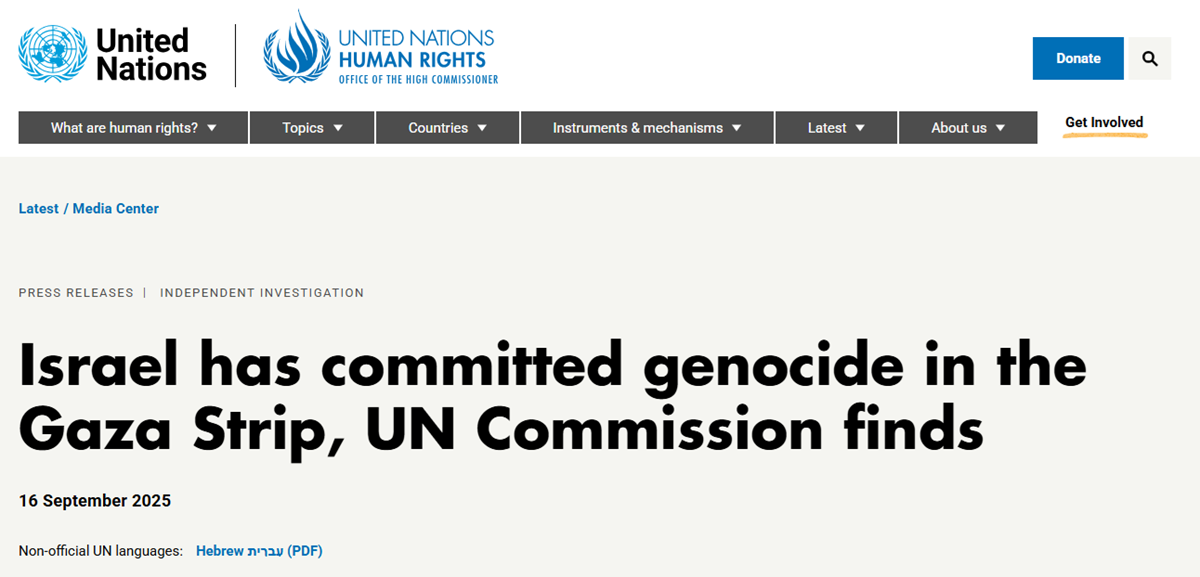
This leads to the next issue: Certain community leaders blame pro-Palestine rallies for encouraging anti-Semitic attacks. Again, to be clear: you can support the Jewish faith, and you can also recognise that the retaliation of the Israeli Government on Palestine as inequitable, immoral, and illegal under International Humanitarian Law–laws and treaties that were created in response to the horrors of World War II, especially against those of the Jewish faith. Those who swore never to let it happen again. Those who are watching it happen in the occupied territory of Palestine (where a cease-fire still allows the Israeli Military to shoot children). That’s not religious. That’s political. Again, it is possible to support a religion while opposing a political regime.
Perhaps, instead of riling up more hatred and divisiveness, maybe we should look at the very explicit neo-Nazi groups who have actively and publicly rallied in Sydney, Melbourne, and elsewhere around Australia. Rather than question the peaceful protests, perhaps when hate-centric groups announce themselves, we should believe them and stop them from inciting hatred and violence. When the neo-Nazi’s are loudly calling for the Jewish lobby groups to be dismantled (as seen and heard in their protest outside the NSW Government House), the NSW Police should have been paying attention rather than looking for another ‘security’ procedure against pro-Palestine protestors.
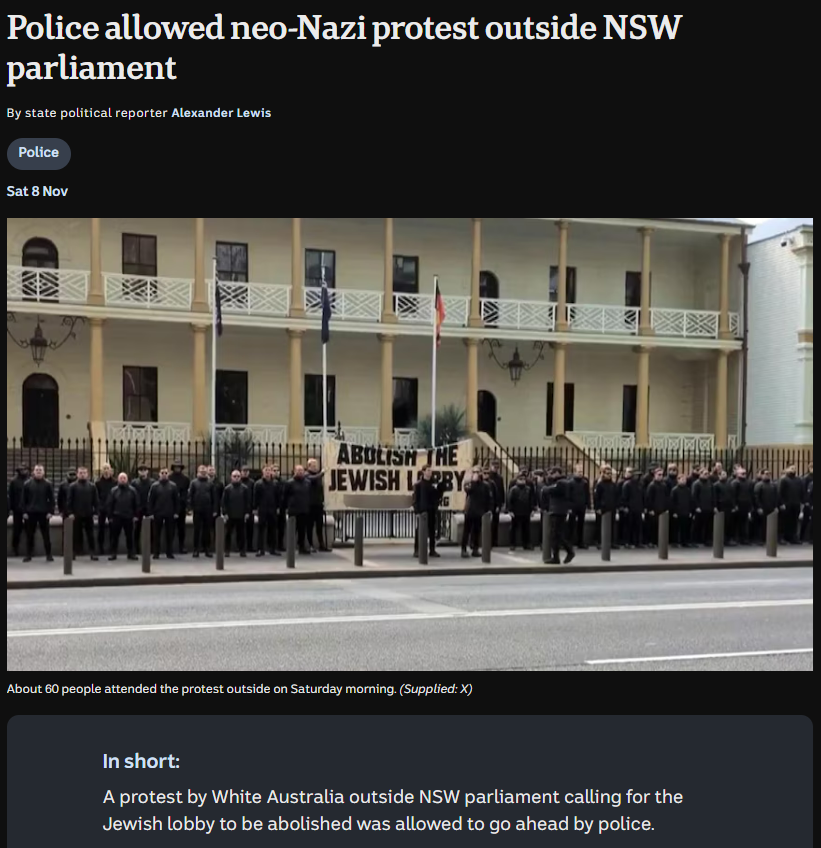
Unfortunately, the rhetoric on this is pretty useless right now. No one wants to hear facts. No one wants to be responsible for enforcing legal duty. And no one wants to read books like Maus. Despite how absolutely appropriate it is to read this book right now.
Maus: It’s a Comic book, right?
Let’s be clear: there are a lot of books about the Holocaust. Maus is not the first, and it certainly won’t be the last. It’s not even the best at talking about the Holocaust. Maus is, in fact, a story about talking about the Holocaust. It’s not just about remembering what happened. It’s important in HOW we remember.
Yes, it is a graphic novel. No, not all graphic novels are for children. Yes, Maus is award-winning. Pulitzer Prize, even. No, it is not about animals–humans are depicted as various animals: Jewish people are depicted as mice. Germans (particularly the Nazis) are depicted as cats. Polish people are depicted as pigs. Americans are depicted as dogs. The French are depicted as frogs.
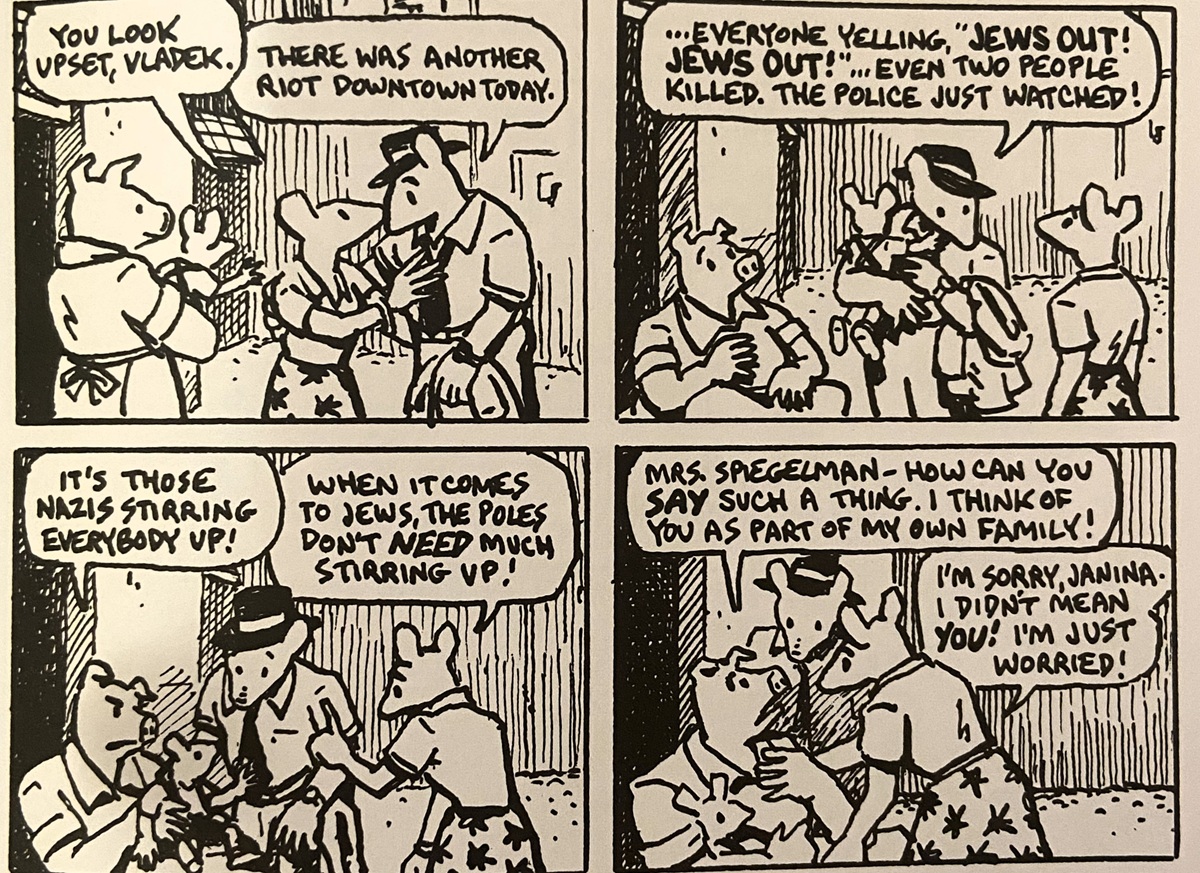
Yes, you should read it. No, it is not illegal (though it is banned in some USA schools because of an image of a naked human lady). There are, in fact, two (2) volumes of Maus: “Maus I: My Father Bleeds History”, followed by “Maus II: And Here My Troubles Began”. Both are entirely created by Art Spiegelman, a highly talented American cartoonist. Maus is the personal account of his family’s experience before, during, and after the Holocaust.
When I say ‘personal account’, it ever so lightly captures the intimate retelling of Spiegelman’s family experiences. Presented in a narrative present-tense timeline with flashbacks to history, Spiegelman shares not just his father’s story of the Holocaust, but also how his father retells it. I think this is the true genius of it. It could have been easy to simply narrate the story from his father’s point of view. But as Spiegelman points out, in very human prose, he did not experience the Holocaust. He will never be able to bridge that divide between him and his father. And while his father would never wish that on anyone, let alone his son, Spiegelman feels bereft. Maus is as much the story of how to connect with the Holocaust as it is to tell the story itself.
Before and After, With Little in Between
Say that last sentence again: Maus is as much the story of how to connect with the Holocaust as it is to tell the story itself. And that’s WHY it is so important to read Maus now. Spiegelman weaves two stories together, emphasising the relationship between the two–something I think needs to be pointed out to many of us. No one can ever really know what it was like to survive the Holocaust unless you survived the Holocaust. No one really knows how it eventuated and rolled out across Europe, how simple citizens allowed the insipid hatred to grow until people allowed the atrocities to take place. Even as the creator/author, Spiegelman understands he can never ‘know’ what it was like for his father. And while he doesn’t always agree with his father, he recognises that the real story is the bridge between father and son, the Before and the After.
Maus weaves together two timelines: the narrative present is set in 1978-1979 New York City, and the narrative past from the mid-1930s to the end of the Holocaust in 1945, across Poland and Eastern Europe. The story begins with Spiegelman asking his father, Vladek, to tell him about the Holocaust, with the intent of creating a graphic novel about it. At first, his father doesn’t see the point, but soon starts sharing his stories about the time Before the War. A time when he was popular with friends and ladies. A time when he was successful with business, and was soon to be married. It’s simplistic storytelling, and yet it sets the scene for what life is like before the war changes everything. A direct contrast to anyone who says, “Oh! But I didn’t see it coming!”
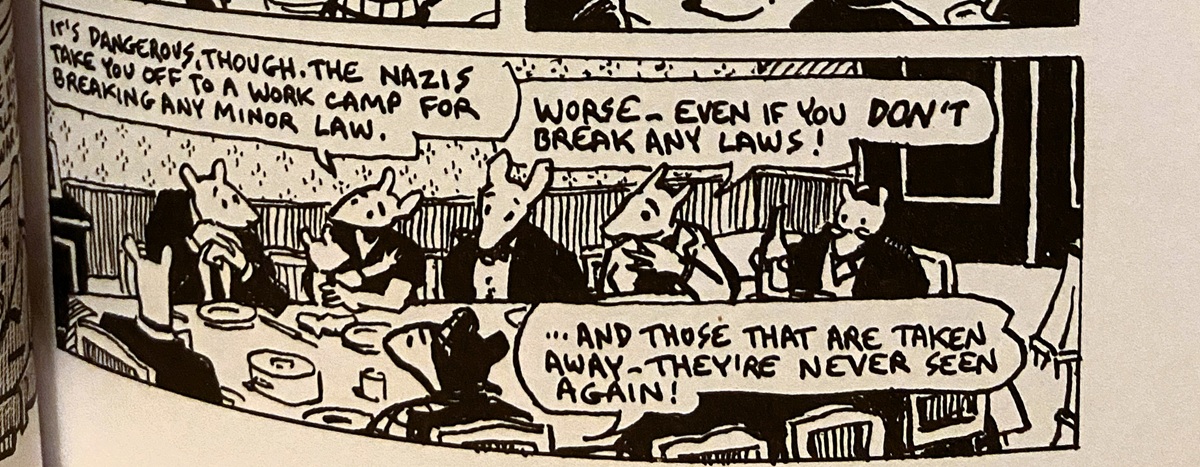
Each time Spiegelman visits his father, he shares the interaction within the story as part of the After. This is the time of Now. It is a time filled with emotion between father and son: love, frustration, separation, and grief. While the main story is meant to be Vladek’s history, it can never truly be separate from The After; Vladek’s experiences create The After. Every experience from World War II, both Jewish and non-Jewish, has created the world we are in right now.
The People are the Story
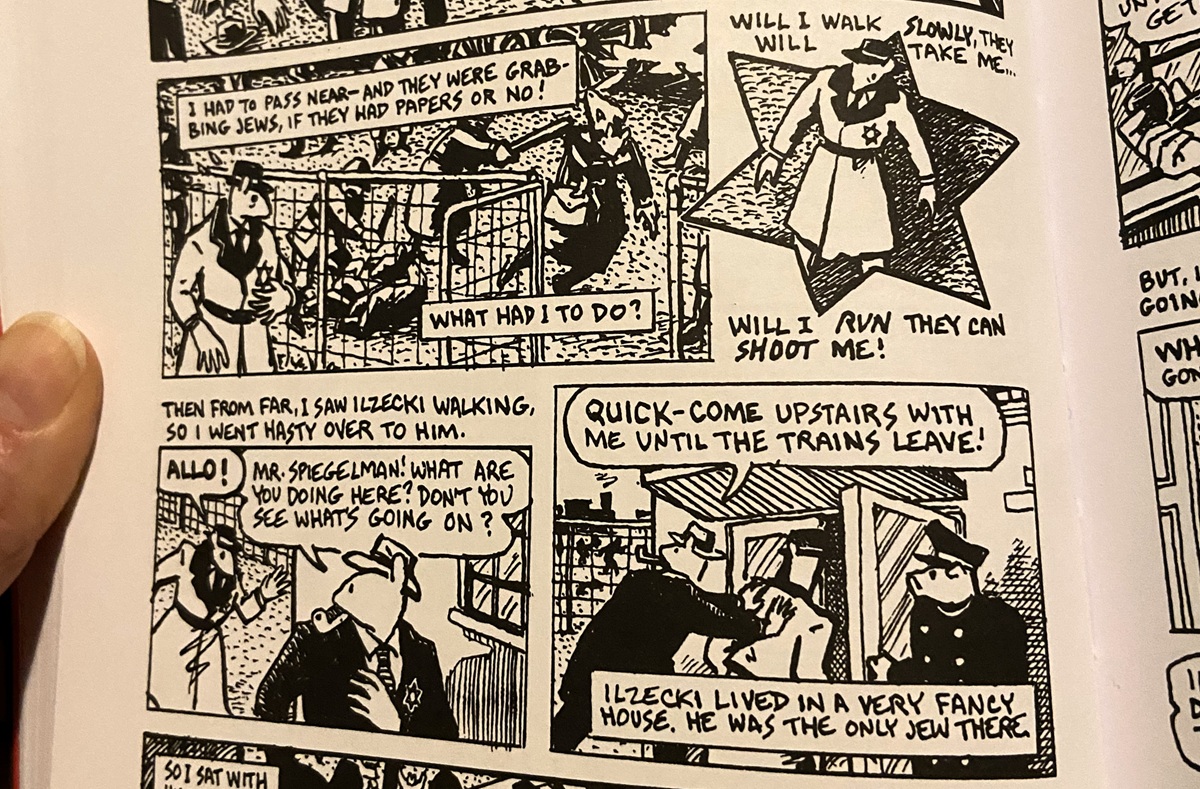
Every character, every person in Maus is a real person. Every day, they made choices. Even in their animal forms, the people are very real. You can see that in the behaviour, even through Vladek’s filter. In fact, Vladek is a great example. In the spirit of outright honesty: Vladek is a bit of an arsehole, both Before and After. Yes, some of this can be PTSD as a Holocaust survivor. Absolutely, yes. The Holocaust was one of the World’s greatest tragedies and should never be repeated. Spiegelman clearly states he will never be able to truly capture his father’s experience, but he did everything he could to share everything he had.
Vladek was a bit of an arsehole before 1939 even happened. One example is his relationship with Lucia, before marrying Art’s mother, Anja. Vladek points out that this part of his story has nothing to do with Hitler and the Holocaust, but Art is right to counter that it adds to the humanity of the story. I never doubt Vladek’s love for Anja, but his treatment of Lucia (pre-war) and his second wife, Mala (post war), is sexist, arrogant, and entitled.
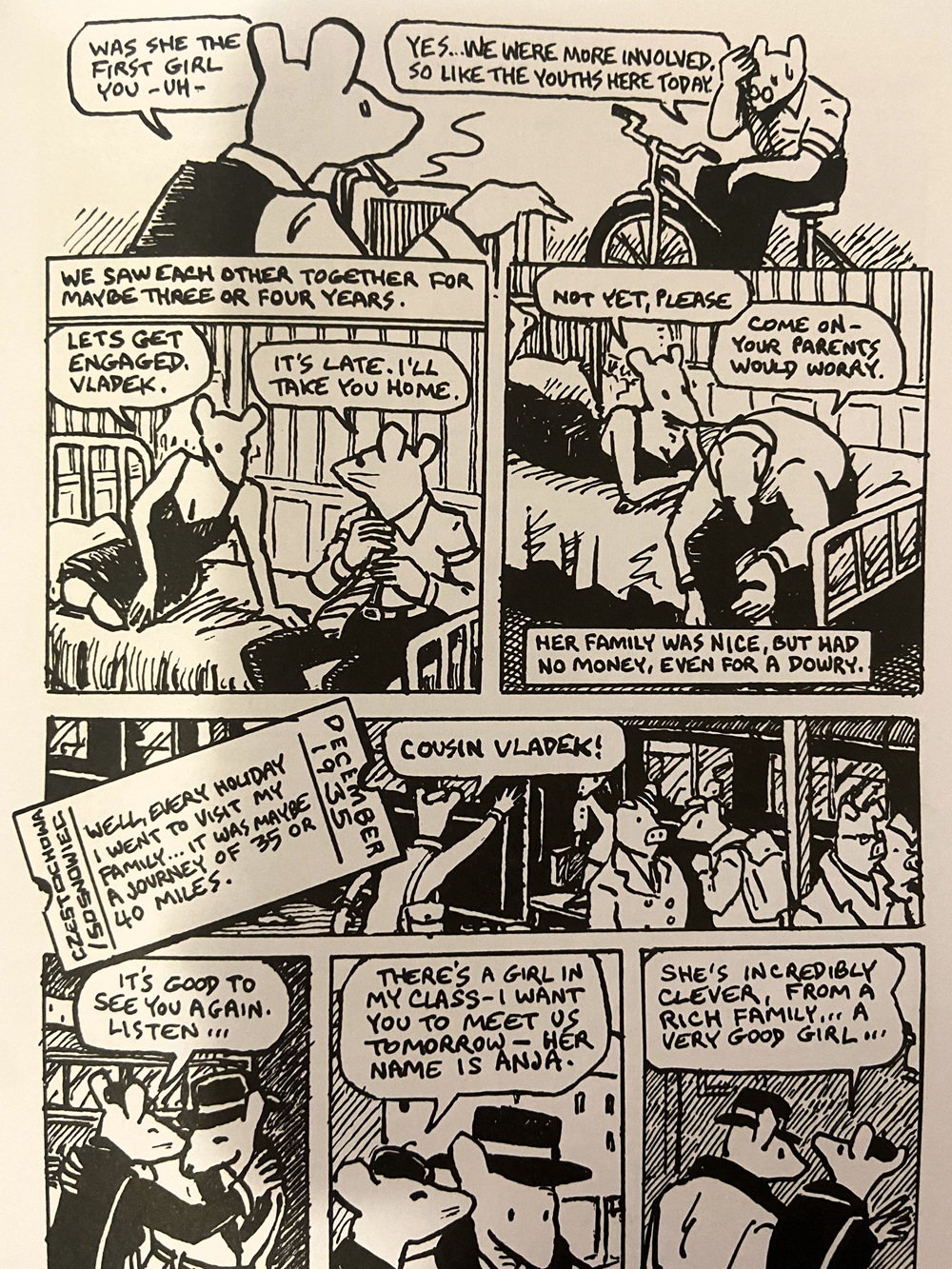
Yet, despite my distaste towards Vladek, it never prevents me from feeling the utmost empathy for his plight. That is the master of Spiegelman’s storytelling. You do not need to like a person to respect their human rights. That’s the whole point of human rights: every single one of us deserves to protect those rights. Not just children. Not just sweet old ladies who attend the Book Club each Monday. Not the young man who always holds the door open. Every single one of us. Spiegelman never hides any of the people in his book. He tells it exactly as his father told it to him. It’s human, and it’s real. Choices were made, and each one led us to where we are now. Even when that choice was silence over telling a racist arsehole to shut up. Even when the choice was to encourage competitiveness in our kids rather than show them how to work together. Even if we voted for money protection and not real social government. Every one of us made a choice. This is the whole point of Maus. It happened to real people, whether good, bad, or morally grey. And we need to make sure it never happens again to anyone: Jewish and non-Jewish. EVERYONE.
Should We Read Maus in School?
High School: yes. Primary school: maybe not. The NSW History syllabus covers the Holocaust in years 9 and 10. Reading Maus requires a certain level of emotional maturity to understand there are no angels in war. We are not reading Maus to elevate Vladek into some hero-worshipping or whatnot. However, there is already a need for emotional maturity in simply learning about the Holocaust and the lead-up to WWII.
That’s kind of what’s missing from our current state of affairs. There are too many similarities in the history leading up to the Holocaust and what we are living through now. It is becoming harder to find survivors willing and able to speak about the overlap of events. To make matters worse, a select few in the younger generations are twisting the events to support their own ideologies. It is no longer enough for us to ‘never forget’; how we remember is more important than ever. Stories like Maus enshrine the narrative as much as the events, and they should remind us to apply it equally to everyone.
In Closing…
To be clear (again), I have no issue with the Jewish faith nor those who practice it. I am not Jewish (nor religious, really), but I appreciate the faith that comes from belief. I do, however, have a problem with politics or even politicised religion that imposes and endangers the lives of others. I have a problem with the ‘romanticising’ of history, winner-centric texts, and ongoing guilt-trips for future generations who need to learn more about how we got there, not just what we did afterwards.
Did I give Maus to my spawnlings to read? Most definitely. And we continue to discuss the social events pre-WWII in a comparative analysis with current affairs. It’s frustrating to see children understand what should be common sense for adults, or at least the adults claiming to be in charge. When the words “Never Again” are quoted, they do not come with fine print saying “to me”. It should mean never again to anyone. Yet, here we are. Ignoring the survivors’ story.
Read Maus. Now is a really good time to read it. Pay attention to life before the war. Watch it lead up to the Holocaust with your 20/20 hindsight magnified with history lessons and commentary. Think about your actions today. And then read it again.
Categories: Book Reviews General Evil Genius

Evil Genius Mum
Evil Genius Mum
- Taking over the world, one blog post at a time
 Evil Genius Mum
1 reply ›