Puzzles, Placements, and Politics at its Best

It’s only July, and I think that I have played the best puzzle video game (if not The Best Game) for 2025: Blue Prince. It is everything I love in a game: a compelling narrative, strong aesthetics, beautiful details in the graphics, a matched soundtrack, and gameplay that supports the player without over- or underestimating our intelligence. This is a game that wants you to sit down and savour it. The puzzle unfolds like an origami maze; changing, evolving, and drawing you in. This is not the kind of game you speed-run or expect to defeat the big boss. No, Blue Prince is the game you load up after thinking about a particular clue for the last few hours, and then find yourself still exploring for another few hours. Sure, it’s ‘supposed’ to be a single-player, but the rest of the family has become so involved, I had to leave the game on ‘sleep-mode’ until everyone was home before I opened the 46th Room. Trust me: it was a big deal.
What is Blue Prince?
Blue Prince is a 2025 puzzle adventure game with a roguelite tile placement mechanic. It was developed by Dogubomb and published by Raw Fury. It’s like Cluedo, but the rooms change and reset every in-game day. The core narrative starts with the death of your great-uncle, Herbert F. Sullivan. He has bequeathed his estate to you, including the much-admired 45-room mansion. The only condition is that you must find and unlock the rumoured 46th Room within a timely manner (thankfully, this time limit is never explicitly set, or I’d be ruined).

Each day starts with a limited number of steps. The blueprints (pun intended) for the house are provided, but with no set room layout. As you open a door, you are offered three potential rooms to draft; thus creating your own house design. When you reach your daily step limit, the day ends, and the blueprints are reset for a new day.

The game is played in first-person perspective. There is no direct interaction with any other characters; no violence or conversations, only messages left behind and contactless transactions. Or as EG Nefarious says, “It’s the best Haunted House”. Your best friend is the map or ‘blueprint’ you lay out each day. The initial goal is to place your rooms on the 5×9 grid map in a way that connects from the front door through the building to the antechamber. However, there is a wide variety of layouts and doorways. There are bedrooms, guest rooms, libraries, kitchens, workshops, gardens, and much more. Some rooms require keys or lockpicks, while others may require a security card for access. It wouldn’t be a maze without a few dead ends, but often the three (3) or four (4) door rooms come with a cost.

Each of the rooms contains clues to the house and the developing narrative; even the dead ends. To be fair, you do not want to complete this game in one day. I’m up to Day 57 in the game and still have five (5) rooms outstanding. Even after opening Room 46, I am eager to continue playing!
Clues Behind Every Door
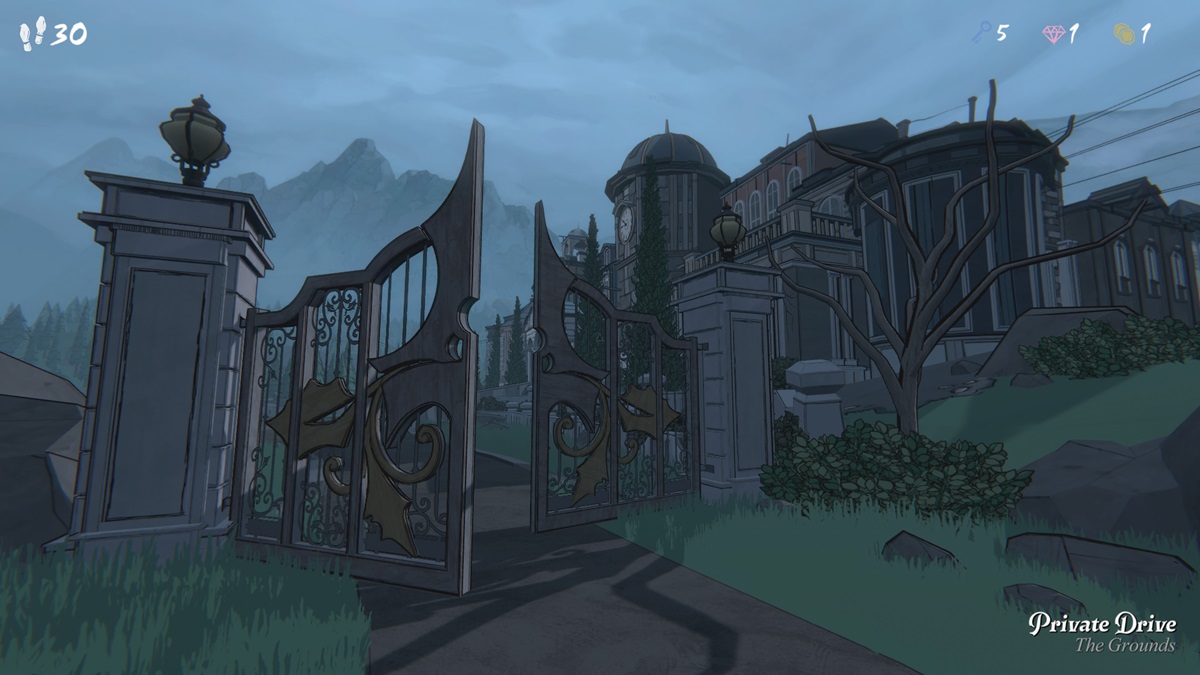
This magical house is filled with wonder and intrigue. There is room for a bit of strategy; for example, I initially took the approach of following the left/west wall with room placement. The first time didn’t take me to the Antechamber and Room 46, but it did highlight a few rooms that are only available on the west side. It’s also how I learned to explore the outside, thanks to the Garage. I also like sharing my gameplay with the family because we come up with different ideas. It took me three game-days to explore The Grounds in front of the house, where EG Zaltu (11yo) was off and running on Day 1. I was worried that watching me play would take out any new discoveries, but they have already found three items that I still haven’t encountered yet. This shows how fresh the puzzle elements are, adapting to various gameplay and ensuring that every experience achieves the same results, but takes a very different journey getting there.
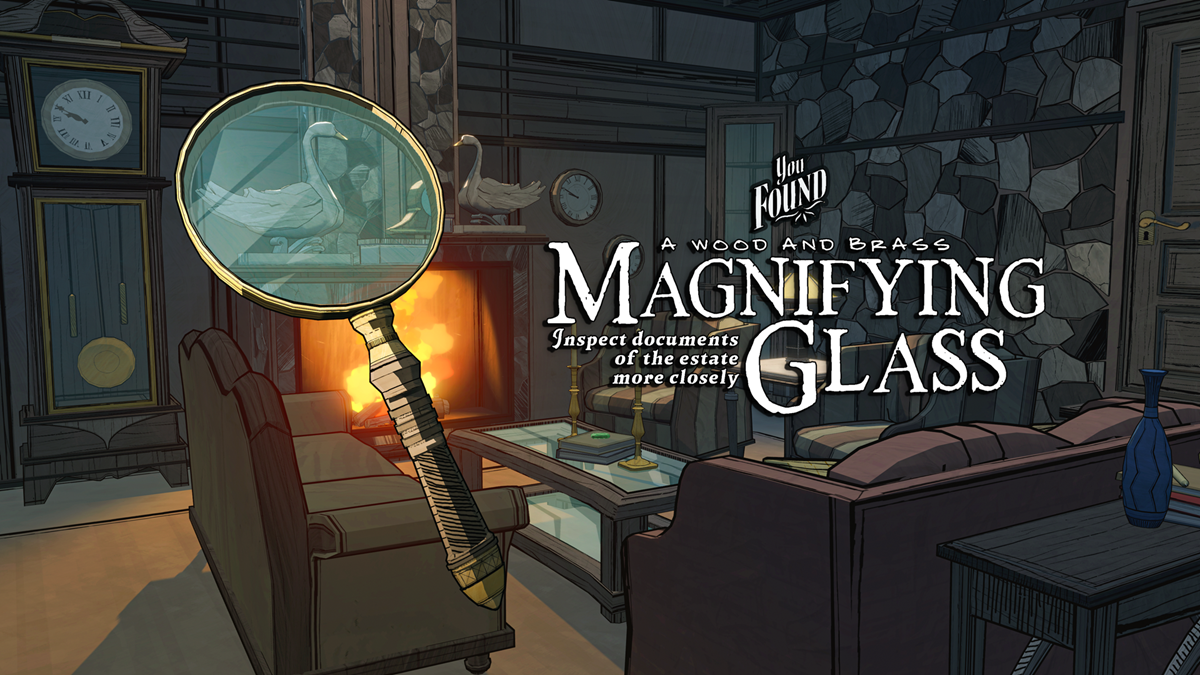
So far, every room has at least one clue, whether for the initial map layout or the subsequent narrative at play. See, the Estate is more than the inheritance of property. It is the inheritance of a family legacy, with mystery and intrigue lining the walkway. Your character is only 14 years old, with a massive property left to you by your great-uncle, who fondly remembered your summer visits as a younger child. His favourite niece, your mother, was a famous children’s book author who mysteriously disappeared a few years ago. You have been living with your father ever since. Mixed in among the clues for Room 46, you will also find parts of your mother’s history–her family, her writing, and her disappearance.
A Narrative Laid Out Through History
I love the strategy and the puzzle elements of Blue Prince, and I’m not the only one. Reviews on Steam are predominantly very positive. Many in the community also love it. However, it should be noted there are some who feel the game is too laborious and a bit of a slog. I did not find this at all. In fact, I found Blue Prince to be a beautiful story told in many steps. Sometimes you have to take a few steps back to find the next step forward, but that is often the case for the most perfect puzzles.
What I found really interesting was the political undercurrent that connected with current global affairs. I think it’s fair to say that Blue Prince was not written specifically as a commentary on US-politics or even global politics in 2025. However, certain elements are too coincidental to ignore. Blue Prince is set in a completely created world, with a complex history that is influenced by central European culture. Kingdoms split, policies change, and soon we are left with corruption, civil unrest, and revolution. The insecurity of the current ‘king’ leads to social dysfunction and turmoil. Much of this is revealed through books in the library and letters found throughout the rest of the building; revealing the details would be too much of a spoiler for me.
Without revealing too many secrets, it’s enough to say Blue Prince is a stunning commentary on the use of censorship as a tool of fascism and political corruption. When you start exploring schoolrooms on your map, you will notice discrepancies and half-truths: what was taught in schools varies greatly from what actually happened. Sound familiar? Personally, I was surprised by how many fellow gamers simply accepted the redacted history books and letters without question or critique. To me, it seemed obvious that the game wanted you to question and explore further. But then again, not every culture and school system has continued to teach Critical Thought. And it shows: outside the game as well as within.
Blue Prince is a Lesson in Itself
For those seeking ‘gameschooling’ elements, Blue Prince offers a plethora of opportunities. However, whether or not you can truly incorporate this game as a gameschooling tool is less likely. The game itself is a long and patient reveal, stretching across multiple plays and filled with “aha!” moments. Many of these are fantastic prompts for deeper discussions: civil unrest, the birth of revolutions, the power of the people over the State, and the censorship of history and education. Each of these is a topic we should be discussing with our spawnlings of all ages. But the randomness of clues hinders the structured learning required to make this game a genuine ‘gameschooling’ tool. You can’t just throw this stuff randomly at kids and expect them to understand. If anything, you can use the narrative and history of Blue Prince to draw parallels with the current world. Symbolism, colours, and keywords clearly relate to a lot of what we see in the news now. While we don’t want to overwhelm young minds, hiding them from the news while schools are punished or commanded not to talk about it only creates a vacuum of wisdom, experience, and change. Maybe that is the lesson we should take from Blue Prince, if nothing else.

The Final Note
Before I give my closing argument for GOTY 2025, I just want to share how I came across this game in the first place. One of my favourite podcasts/segments on the radio is Game Show on ABC Classic FM (Australia) with Meena Shamaly. You can catch it on ABC Classic on Fridays at 6pm, or listen to it on the ABC Listen App. Meena highlights a different theme each week, sharing a collection of games and discussing the orchestral scores that are the soul of our favourite video games. The examples span from fan favourites to new indie releases, and have often been my source for discovering new games, often just based on the soundtrack alone.
Blue Prince is one of these games. EG Nefarious and I caught it on the radio a few weeks ago, with Meena highlighting the deep Bass Clarinet used within the music. Nefarious is a Bass Clarinetist, and we rarely hear his favourite instrument take centre stage. We literally stopped talking mid-sentence to listen to Blue Prince on the radio and were captivated by the soulful tones and moody vibes. As you progress further into the game, you will find certain rooms bringing out different tones and melodies, shifting with sounds as you shift the rooms. It’s worth pausing at times to listen to the change in music, not for clues but simply to appreciate the effort put into the soundtrack.
The Blueprint to an Almost Perfect Game
Score: 5 out of 5 Red Ruby Gems
I do not think I will ever be finished with this game. Even after unlocking the 46th Room, I genuinely enjoy returning to the game to learn more. While I am not aching to play the game every minute of the day, I often find myself thinking about a particular clue or puzzle and planning some free time to revisit the game.

The aesthetics are absolutely perfect, with a blend of soft art, a mood-filled soundtrack, and movement that does not trigger motion sickness (thank you!). Blue Prince is a journey into the narrative, guided by puzzle and discovery. The sociologist in me is thrilled with the commentary, tickling my brain when I discover a clue and can see it all unfolding. I know a few may not appreciate the slow, methodical approach to the game. However, Blue Prince is an explicit rejection of running head-on into games and forcing solutions when you haven’t understood the foundations first. This is the kind of game that rewards you for thinking, and not too deeply, but enough to at least question.
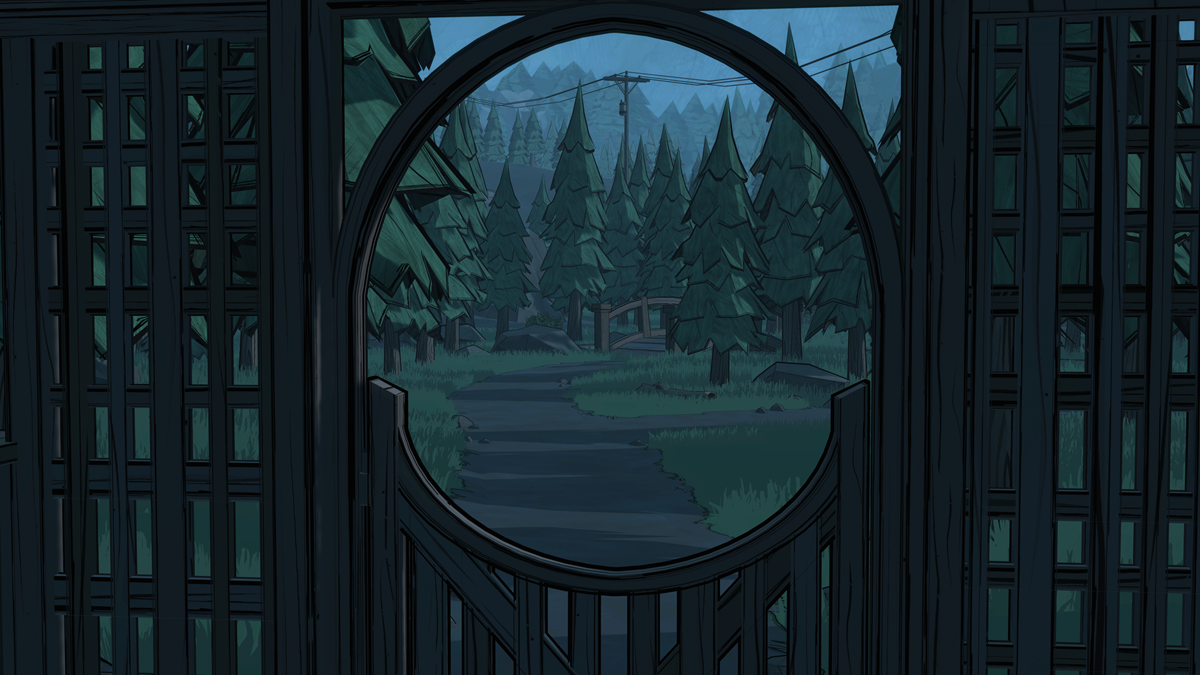
And if you find yourself thinking of this game when you listen to or watch the news, perhaps this is a good thing. Perhaps we need a game like Blue Prints to remind us to pay attention to details, question the rhetoric, and learn from true history. You don’t have to. But I do like a game that gives me enough credit to do so.
Thanks to Raw Fury for providing a copy of ‘Blue Prince’ for review purposes. All opinions are my own. No money was received for this review, and no AI was used in writing this article.
Blue Prince was released on PC, Steam, PS5, and Xbox in April 2025 for around USD$29.99.
Categories: Curriculum of Evil Gameschooling video games

Evil Genius Mum
Evil Genius Mum
- Taking over the world, one blog post at a time
 Evil Genius Mum
Minion Musings: