Once upon a time, there was The Talos Principle: a little indie puzzle video game building on the philosophical question of who we are as humans. It was lovely to look at, challenging, and intellectual enough to make me think I was using my brain to play the game. Almost ten years later, the developers have given us the sequel, The Talos Principle 2. In some ways, it is a logical sequel to the original game: it continues with the same art in its puzzles, with the same thoughtful philosophical questions. But in many ways, it is very different to its predecessor. In true form with the natural evolutionary process, The Talos Principle 2 is better than its parent. There is more story, more character, and more soul; which is strangely enticing for a game about robots. The official release is 2 November 2023, but until then, you can play the demo on Steam and measure it against our checklist review.
1. What is The Talos Principle 2?
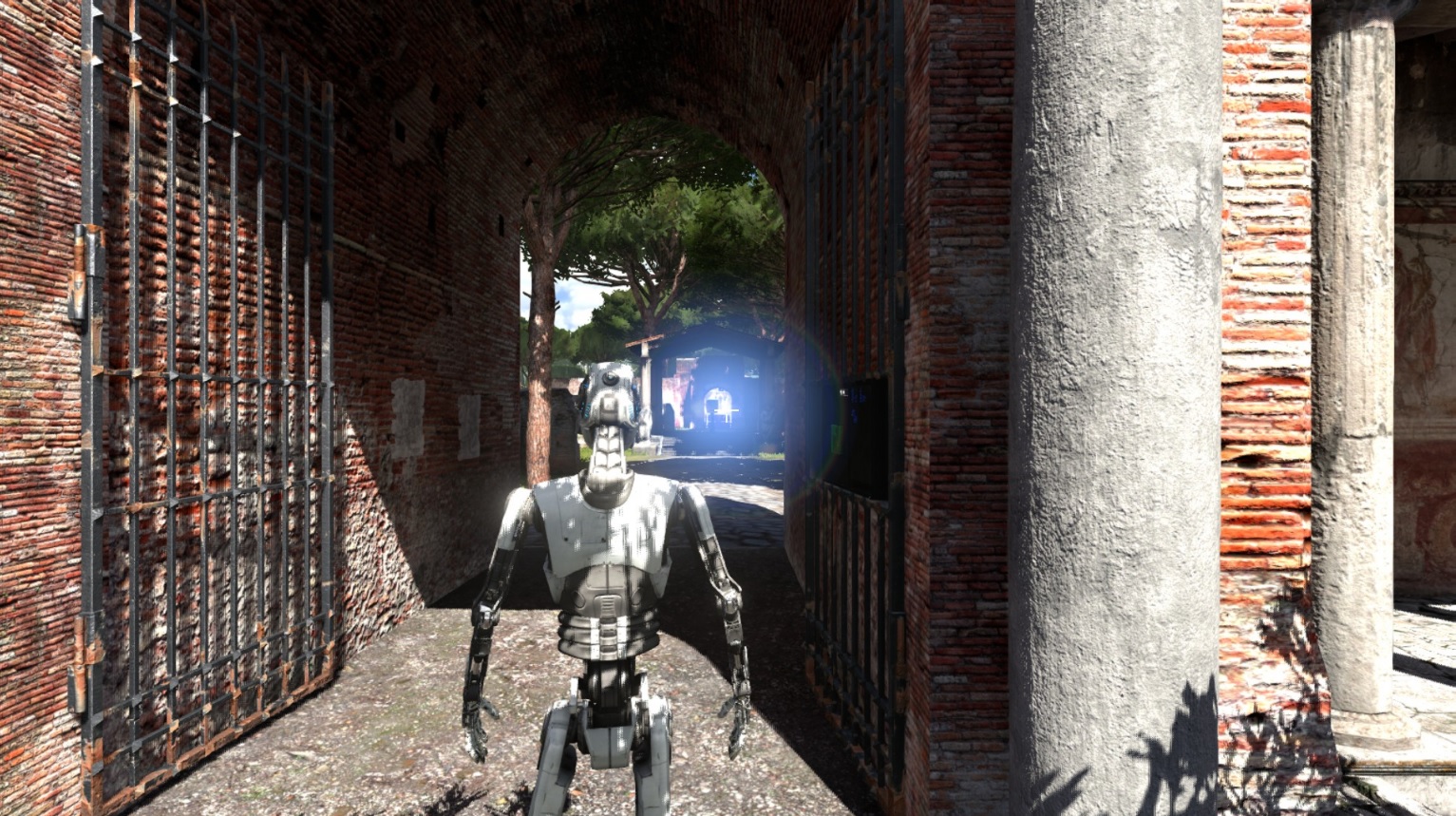
If you’re going to make a sequel to one of the greatest puzzle games ever created, you need to prepare for some heavy thinking.
The Talos Principle 2 is the sequel to The Talos Principle (TP1), first released on Windows in December 2014. The original game was a single-player puzzle game with elements of adventure built on a philosophical narrative. TP1 followed in the footsteps of Portal (2007) and Myst (1993), both of which set a benchmark for the genre. Myst was groundbreaking for its narrative and problem-solving. Portal took it further with action and adventure. TP1 was indeed the best of both worlds, creating a terrifying simulation of puzzles with robot sentinels that will instantly destroy you, all while you question whether it’s real anyway. Where TP1 stands out is the deep dive into philosophical questions about our existence, identity, humanity, and society’s natural progress. Phillip K Dick would have a field day with this.
The Talos Principle 2 (TP2) is quintessentially TP1, but it has taken the narrative and the mind-messing philosophy and spun the dial to 11. It is described as a metaphysical puzzler, which is mostly accurate but also feels like it isn’t telling you everything. TP2 is a puzzler-narrative-adventure with a touch of RPG and mystery in an almost open-world setting. You can play in either first-person or third-person, depending on your preference. Surprisingly, TP2 balances all of this in a neat package; the demo indicates a rich world with a compelling story to follow.
2. Play the Game: Follow the Puzzles
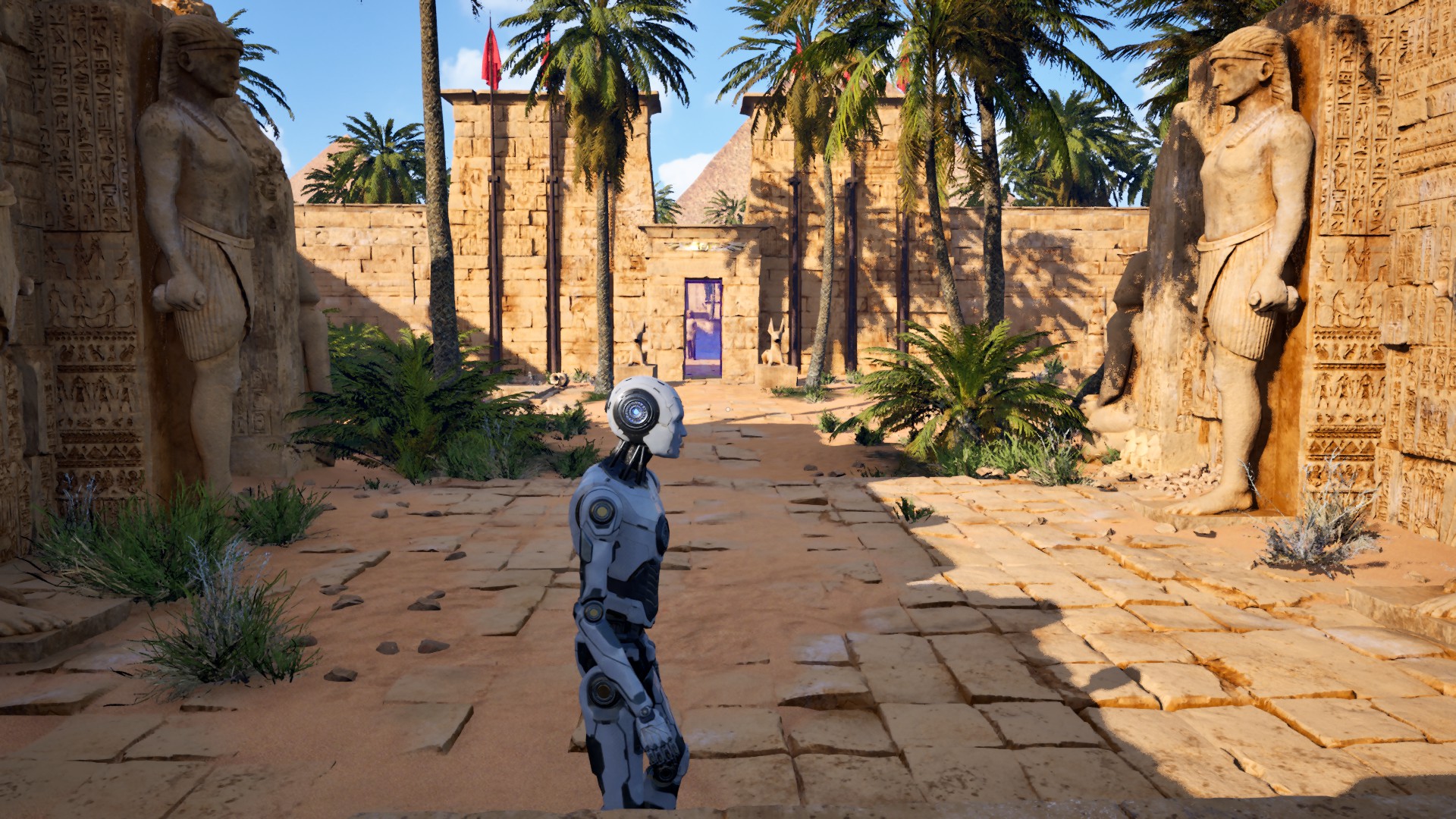
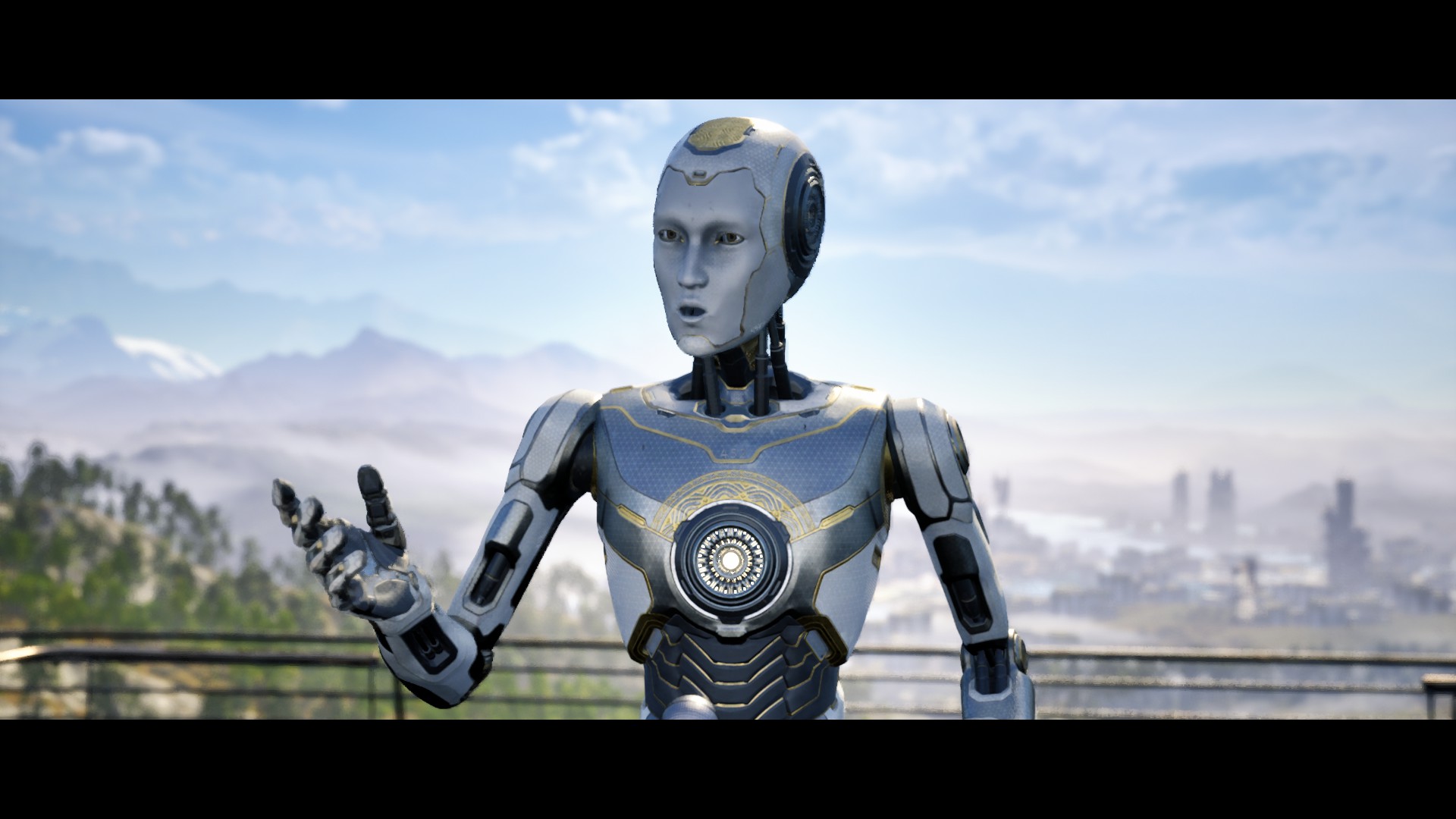
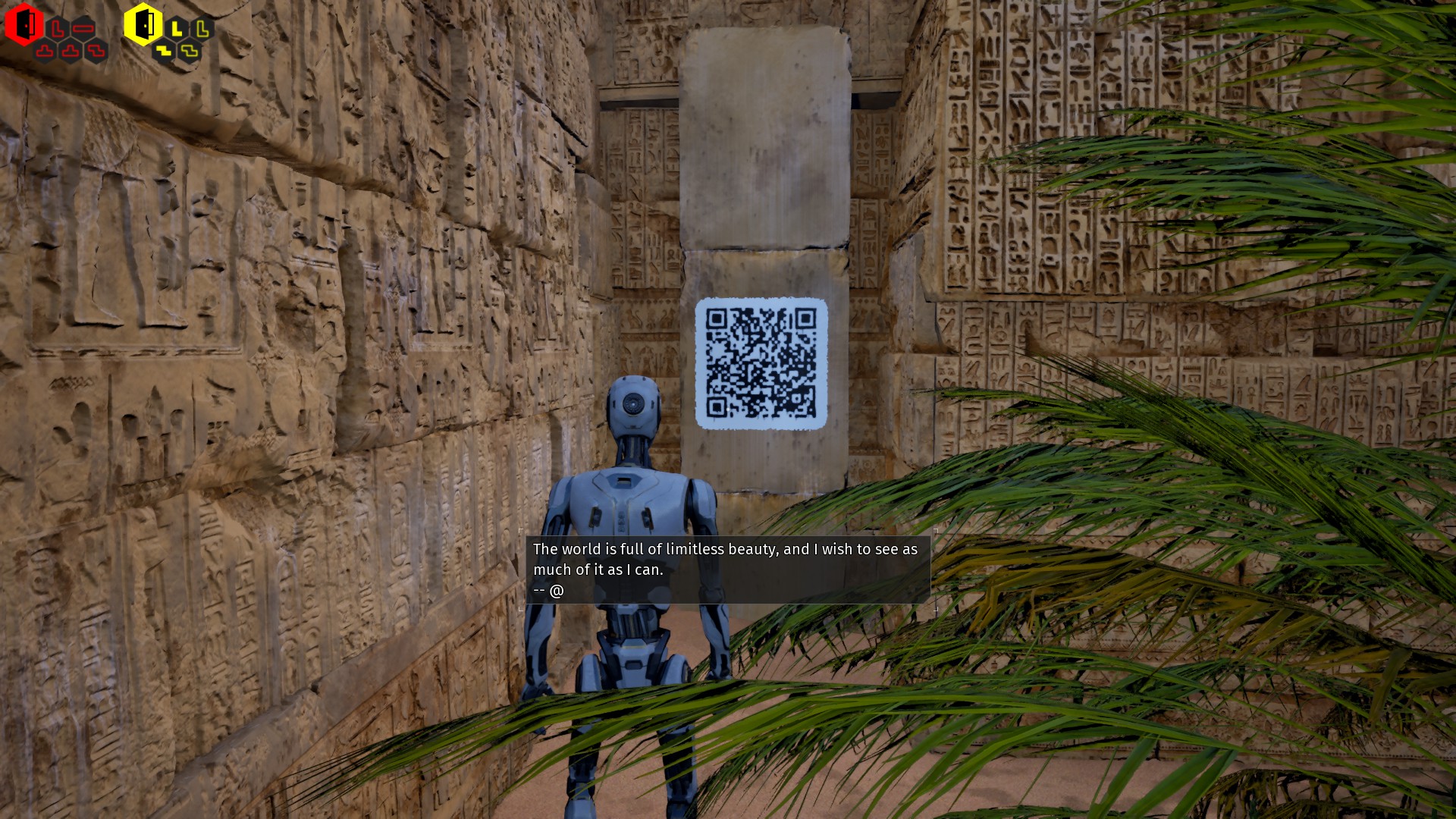
The game starts with a simulation that echoes TP1, teaching you the basic functions of the game. You are greeted by the voice of Elohim, who guides you through the testing zone (looks like Ancient Egypt) with some starter puzzles. Elohim is a sentient being and part of the initial simulation used in the previous game. By the time you finish the final ‘test puzzle’, Elohim will determine if you are ready to progress to the ‘real game’ and awaken as 1-K, the 1000th android to be ‘born’ in a futuristic city. It’s a nice transition from the old into the brand-new world. A neat way to say, “Hey. Now the game really begins.”
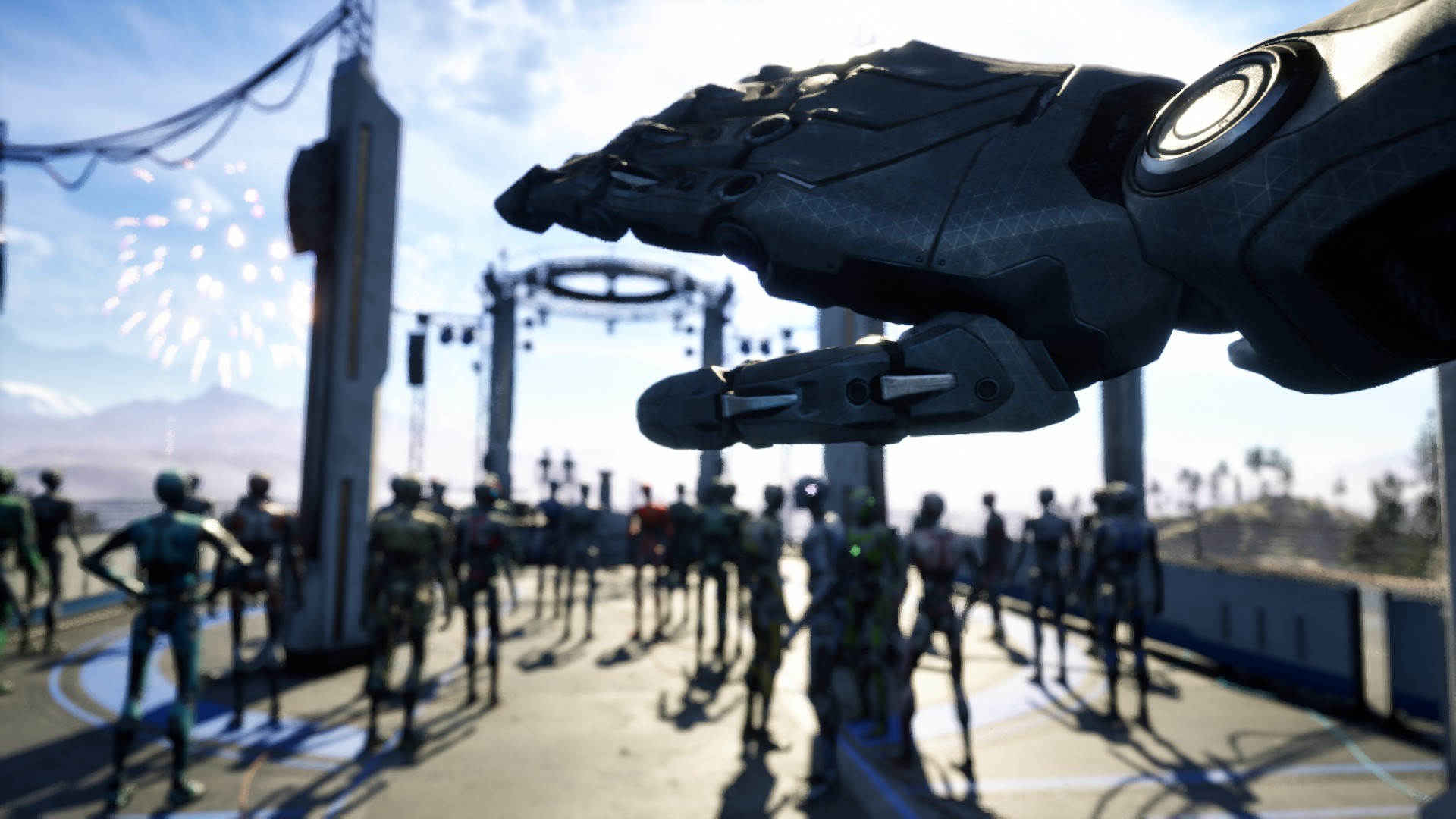
Before you even step outside, you are thrown into a philosophical quandary: The original Great Goal was to create/awaken 1000 robots, stop there, and live in perfect harmony with nature in a human-free Earth. But some robots think the original Goal was a starter position, and we should continue to build and grow. While the robots have tried to learn from humans and are actually considering their finite resources, an unknown holographic projection appears in the middle of city celebrations. The projection invites the robots to come and visit an island outside the city.

It may seem like I’m spending a lot of time with the narrative, but it is an integral part of the gameplay and done so very, very well. TP2 is a puzzle game, first and foremost, and yet the puzzles are never there for the sake of puzzling. They are all part of a bigger story, exploring the world around you and building the existence of life itself. As mentioned above, the story is compelling, building on clues and hints within the puzzles. If you want to know what happened and what will happen, you need to solve the puzzles.
3. Game Mechanics: Piecing It All Together
Now, puzzle games are both my absolute favourite and equally the worst games ever. Seriously, EVER. It’s the several moments of wailing, “I’m too stupid to play this game!”, followed eventually (hopefully) with “FINALLY! I have it!”. The good news is there is a fairly even balance between the two. Plenty of dopamine from the sense of achievement, giving me a sense of personal intelligence. In short, the puzzles are challenging but don’t leave me feeling like a useless reptile.
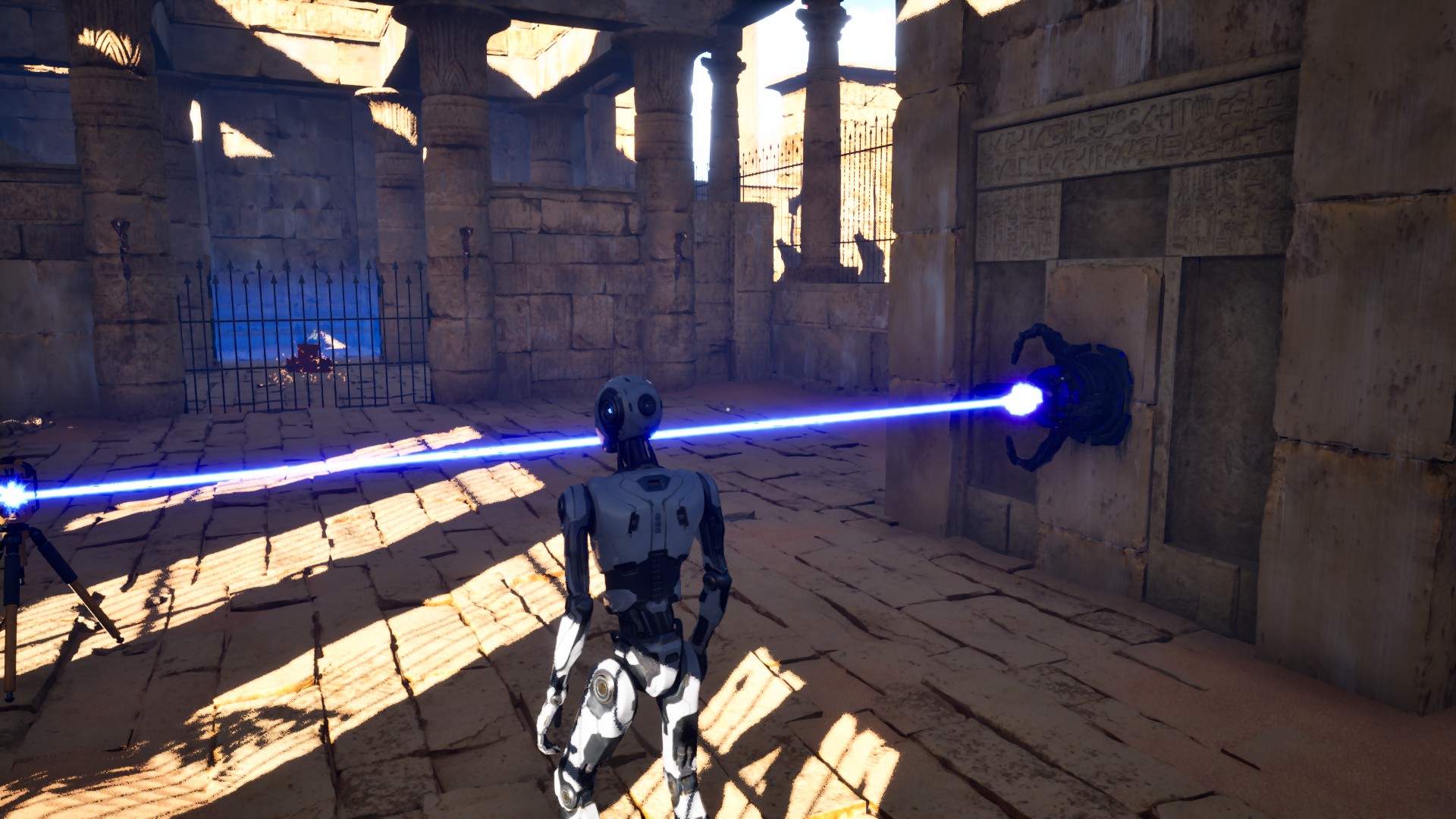
The most significant note about the puzzles is how much they depend on logic reasoning and visual sequencing. In the initial stage, many puzzles are based on step-by-step processing. Puzzle key piece is here. User must use block to reach here. It’s a nice, easy intro. TIP: if you are sure your idea will work and it’s not working, line up and try again. I had two puzzles that seemed ridiculously easy but were not clicking into place. Once I realised I hadn’t lined it up properly, it worked out.
My preview copy was a small taste of the entire game (about a quarter), but the puzzles I have seen so far range from interesting to WOW! They come with various tools, including blocks, fans, signal jammers, light emitters, light converters, and teleport pads. Compared to TP1, I prefer learning how to line up a signal jammer without a robot sentinel nearby, ready to disintegrate me. So far, one of my favourite puzzle tools is the RBG light converter. Using these converters, I can combine light from a red emitter and a blue emitter to create a green light beam. The eventual solution can look a bit like a rave party, with plenty of WOOP! WOOP! when I finally figured out the set-up required.

All the puzzles are apparently solvable, but some took me longer than others. It is meant to be challenging, and it definitely is. Unlike similar puzzle elements like Shrines in The Legend of Zelda: Tears of the Kingdom, there are no easy ways to cheat in TP2. You’ll have to use your brain, and you will be better for it.
4. Visuals and Sound: 3D Puzzles Require 4D Thinking
Straight up, this game is gorgeous. Croteam has put a lot of thought into TP2 world generation. If I had to pick my fave console to play this on, I’m leaning towards PS5. My gaming PC is not ‘top-of-the-range’, and I fear that would not be enough for the true beauty of this game. TP2 is not yet scheduled for release on Switch; while being a friendly userface and controller, Switch requires many games to sacrifice their visuals to play on the platform. Since I don’t have an Xbox to compare with, this one is heading for our PS5 library.

The soundtrack is nice, but at this point, nothing has really caught my interest as a stand-out. Instead, it is far more like a background feature. The casting for the voice actors is spot-on, with each performance bringing subtle depth to the characters.
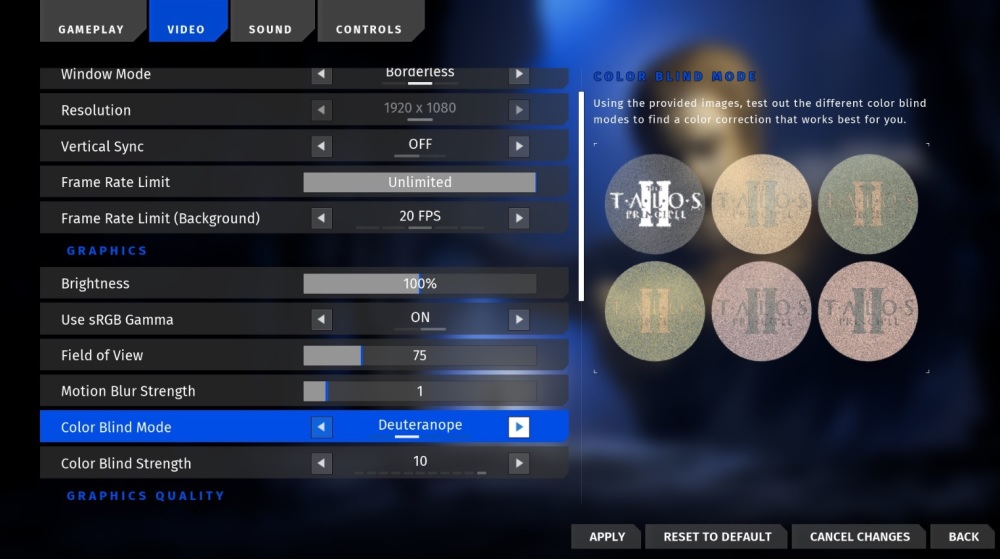
On the point of visuals, I genuinely appreciate the ability to check both motion sickness and colour blindness. Many elements depend on visual accuracy in colours/shades and movement. I suffer from motion sickness (thus, no VR game reviews for EG Mum). The suggested motion sickness settings were perfect for me, with a slower speed and less blur. I also checked the colour blindness settings with a family member, which offered four (4) different settings for different types of colour blindness. FANTASTIC! Usually, developers simply go for an extra texture grey scale. TP2 is far more considerate in its design and set-up. Thank you for that alone!
5. Consistency: Do I Need to Play TP1 first?
No. I like TP1 and highly recommend it to anyone who likes puzzle games. But it’s not essential as a lead-in to TP2. The starter simulation is a cute little callback to the original game, and there are plenty of references in the lore as it develops. However, it is easy to play as a standalone, and you will not miss anything (except for a few extra hours of fun).
6. Can the Whole Family Play TP2?
I have this game already lined up for 14-year-old Nefarious, our resident puzzle nerd. He just finished playing Portal 1 and Portal 2. He also loves Breath of the Wild and Tears of the Kingdom. I have yet to come across anything visually questionable for this age group.
On the other hand, EG Zaltu is 10 years old, and while visually she would be fine, the narrative is a little dense for her, and the puzzles definitely increase in complexity. Generally speaking, both versions of The Talos Principle are rated for ages ten years and above. Personally, I think it will depend on the individual level of your spawnling.
7. Gameschooling: So Much to Learn
One of the things I love about TP2 is the discussion on Artificial Intelligence. From the very outset, TP2 announces itself as a philosophical puzzler. And it is, with extra servings on the philosophical. There is a lot to process and consider, looking at our sense of identity, what qualifies as humanity, and the responsibility that comes with it. Naturally, this is great for any students studying philosophy and, to some extent, history. While there are no direct historical references within the narrative game, there are plenty of quotes and considerations from history.
There is also a lot to gain from playing puzzler games, especially one as rich with visual logic sequencing as TP2. Research shows that video games can significantly impact cognitive and non-cognitive skills. Cognitive skills require knowledge and information to progress, while non-cognitive skills include perseverance, patterns of behaviour, and understanding our relationship with the environment. A 2014 study showed Portal 2 can improve problem-solving skills, spatial skills, and persistence for designated tasks. Another study in 2017 showed how puzzle games like TP2 can develop graduate skills in higher education students, specifically improving communication, resourcefulness, and adaptability. I mean, I don’t want to say video games are good for you… but this shows that games like TP2 can potentially make you smarter. And it can be good for you. 😛
Final Score: 4.5 out of 5 RBG Light Converters
This is an auto-buy for us on release. I’m always one for an enticing narrative, and TP2 has built a society to go with its visual world. Visually, Croteam has created a world that aches to be explored. It is filled with history and social commentary as this future civilisation learns to live in its new environment. But the world-building is more than the visual surroundings. It also includes the history, culture, and society that fills the narrative. The robots themselves are fully-rounded characters with personalities and dialogue that stand out. There is just the right balance of comedy to break up the serious contemplation. It is easy to become invested in the storytelling when the game welcomes you into a genuine simulation for a potential future.
While the game is a puzzler at heart, I feel the puzzles are built around the narrative, and I’m good with that. It feels more natural and organic (ironically). It gives the puzzles a purpose rather than just a mechanic that pushes you through the game. In saying that, some puzzles truly do my head in. *sigh* Take a break. Come back. Try again. It helps.
The Talos Principle 2 launches on 2 November 2023. You can play it on PC, PS5, and Xbox Series X for around AUD$43.95. You can play the demo version on PC/Steam now. Visit the official website here for more information.
Thanks to Croteam and the POWER UP PR team for the advance preview build for Talos Principle 2. All opinions here are my own. All images are screenshots from my own gameplay with the demo provided.
Categories: Gameschooling video games

Evil Genius Mum
Evil Genius Mum
- Taking over the world, one blog post at a time
 Evil Genius Mum
Minion Musings: